Deep Dish Pie Crust (Works For Any Pie!)
The best pie crust recipe for any pie from a deep dish, mile high to a thin slab pie. Can be halved, doubled or even quadrupled!
Works For Any Pie
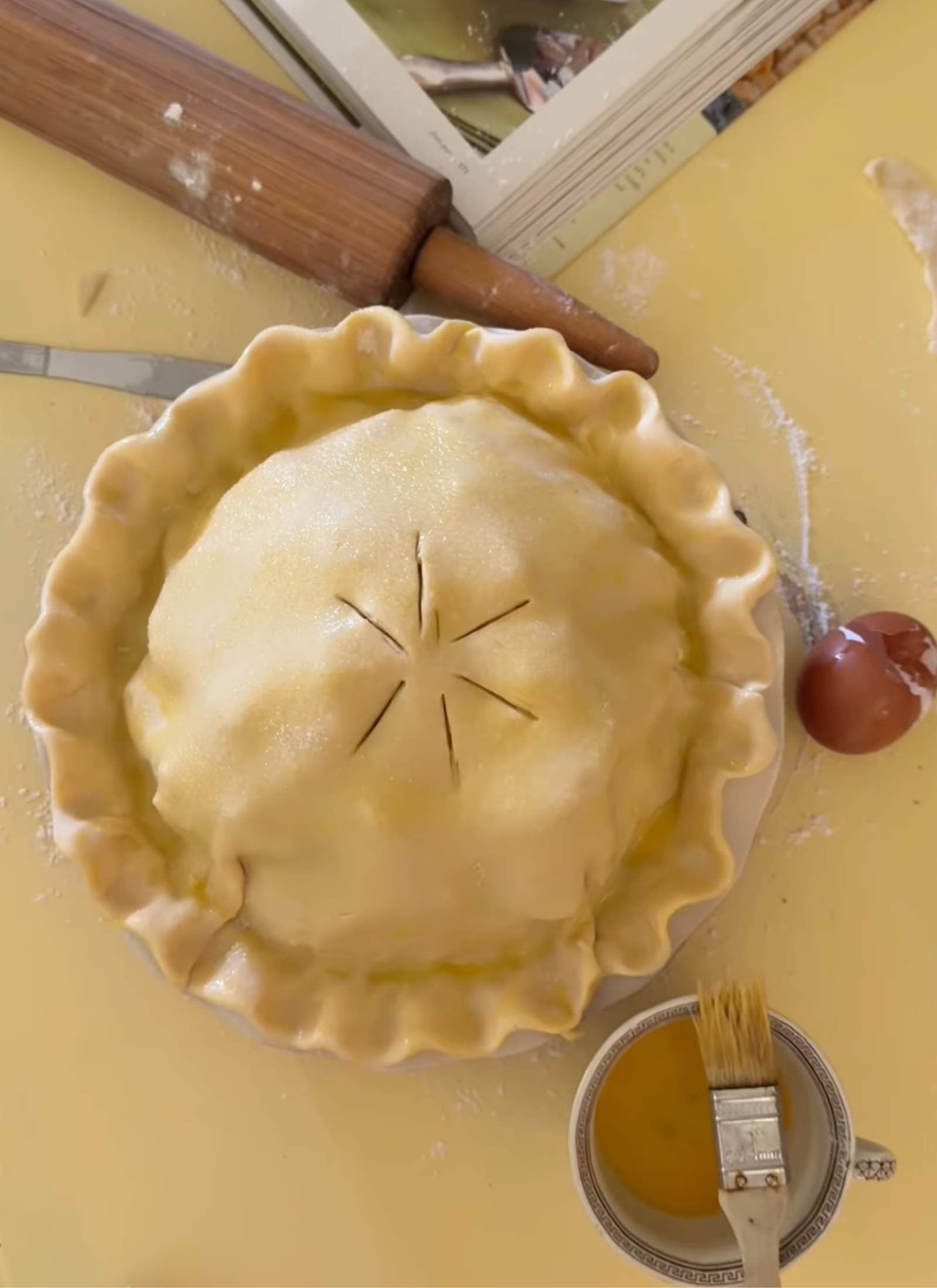
This is my go to homemade pie crust recipe for just about every pie I make here at the farmhouse. It can make enough for any pie you could dream up, from a regular 8-10 inch pie to a 10-inch deep dish, and up to a double crust with the right adjustments.
I rarely make a pie that isn’t deep dish, but this recipe makes plenty of dough for just about any pie you have in mind. Half of a batch should be the perfect amount of dough for a standard double-crust pie or two single-crust pies (like a delicious pumpkin pie, oh or maybe a chocolate fudge pie or banana cream! Can you tell I love pie?), while a full batch will make a nice deep dish double crust or two single deep dish pie crusts (maybe two banana cream pies?! A gal can dream!). For something a little bigger, like a slab pie or a mile high pie, I like to double the recipe to have enough dough. And in my opinion, it’s always better to have a little too much pie dough than not quite enough! And this is an easy recipe, easy enough to whip it up quick and have it ready to go when you need it, so if you’re worried half a batch won’t be enough, go ahead and make the whole thing. Any excess dough can be used to make cute little cutouts for decorating your pie or tucked away in the freezer for another day. It freezes beautifully!
A Few Things I’ve Learned About Making Pie Crust
A good homemade pie crust really isn’t difficult, but there are a few little tricks I’ve learned over the years that make all the difference.
The biggest one is keeping the butter cold and leaving it in nice, large pieces. I know a lot of recipes tell you to work the butter into the flour until it resembles little peas, but I prefer to leave mine much larger. Instead of crumbling the butter into tiny pieces, I flatten it into little sheets throughout the flour.
Those sheets of butter help create the flaky layers we all love in a homemade pie crust. As the pie bakes, the butter melts and its moisture turns to steam, helping separate the layers of dough. It’s the same reason I try not to overwork the dough or let it get too warm before baking.
And while I prefer a good butter crust, you can certainly make pie crust with other fats, too! Lard and vegetable shortening have both been used in homemade pie crusts for generations. They do behave a little differently, though, so you may need to adjust how you handle the dough. Butter is simply my favorite for its flavor and those lovely flaky layers.
I’ll show you my favorite ways to keep everything cold as we go along. One is especially handy when you’ve made your dough ahead of time, and the other is my favorite way to prepare a whole pie before baking.
What Is The Trick To Making Good Pie Crust?
The biggest trick is to chop the butter into large chunks and when cutting into the crust, flatten them into sheets but don’t crumble them up any smaller. You want large coverage of butter to create air pockets when the butter melts. It also helps to keep it all as cold as possible until it hits the oven. The BEST way to do this is to chill the entire pie after assembly before baking. Be careful with your pie plate, putting a cold dish into a hot oven can make it shatter. I like to chill my pie, then pull it out and place on top of the preheating oven. This is only long enough to warm the pan so there is no shock, but will not warm a pie since it’s so thick. Any metal or throw away pans don’t need this!
Is Pie Crust Better With Crisco Or Butter?
I prefer butter crusts so that is what I use. But this recipe will work with any fat you choose from butter or ghee, to lard or even vegetable shortening and the instructions remain the same. You will still work off your specific pie recipes but keep in mind the tips for a delicious pie crust with a homemade taste (because it is!)
Deep Dish Pie Crust Video(s)
Deep Dish Pie Crust Recipe
- 2 1/2 cups all purpose flour
- 1/2 teaspoon salt
- 1 tablespoon sugar (omit for savory pies)
- 1 cup cold unsalted butter
- 1 tablespoon white vinegar
- 1/4-1/2 cups ice water
Combine Dry Ingredients
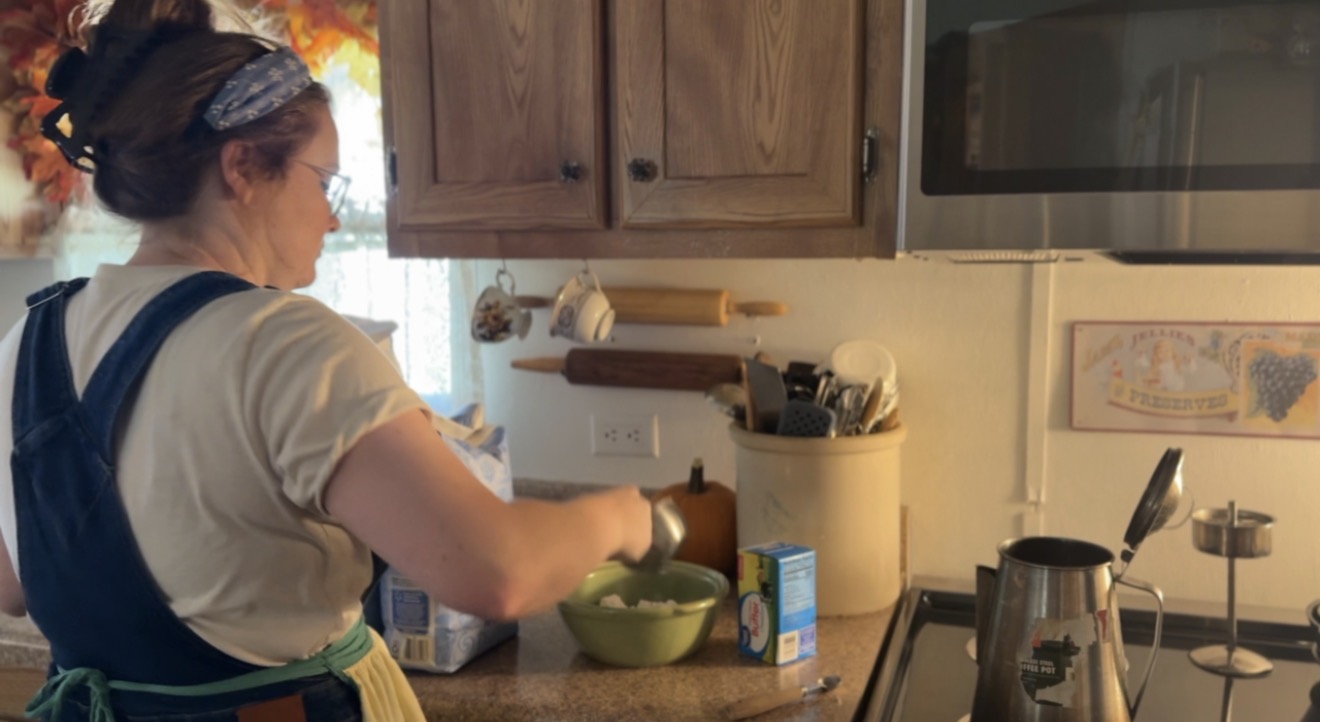
In a bowl, add flour, salt, and sugar and mix to combine.
Cut In Butter
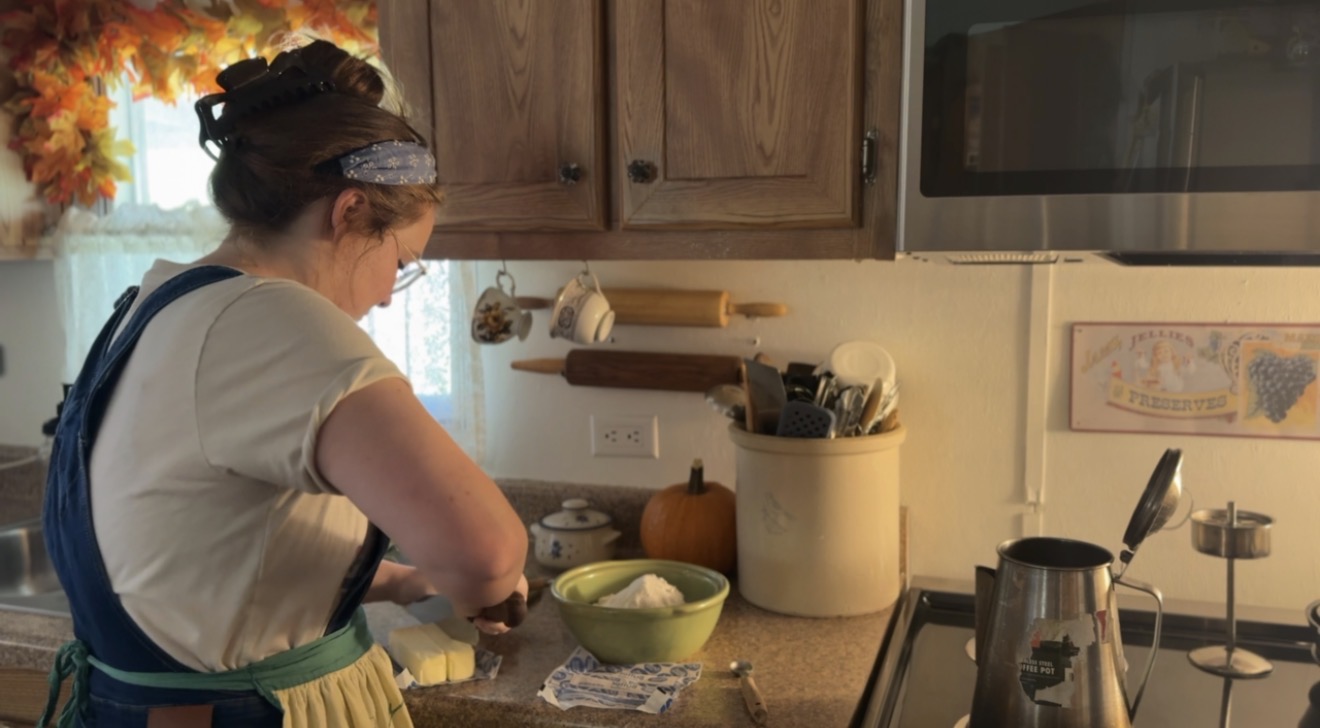
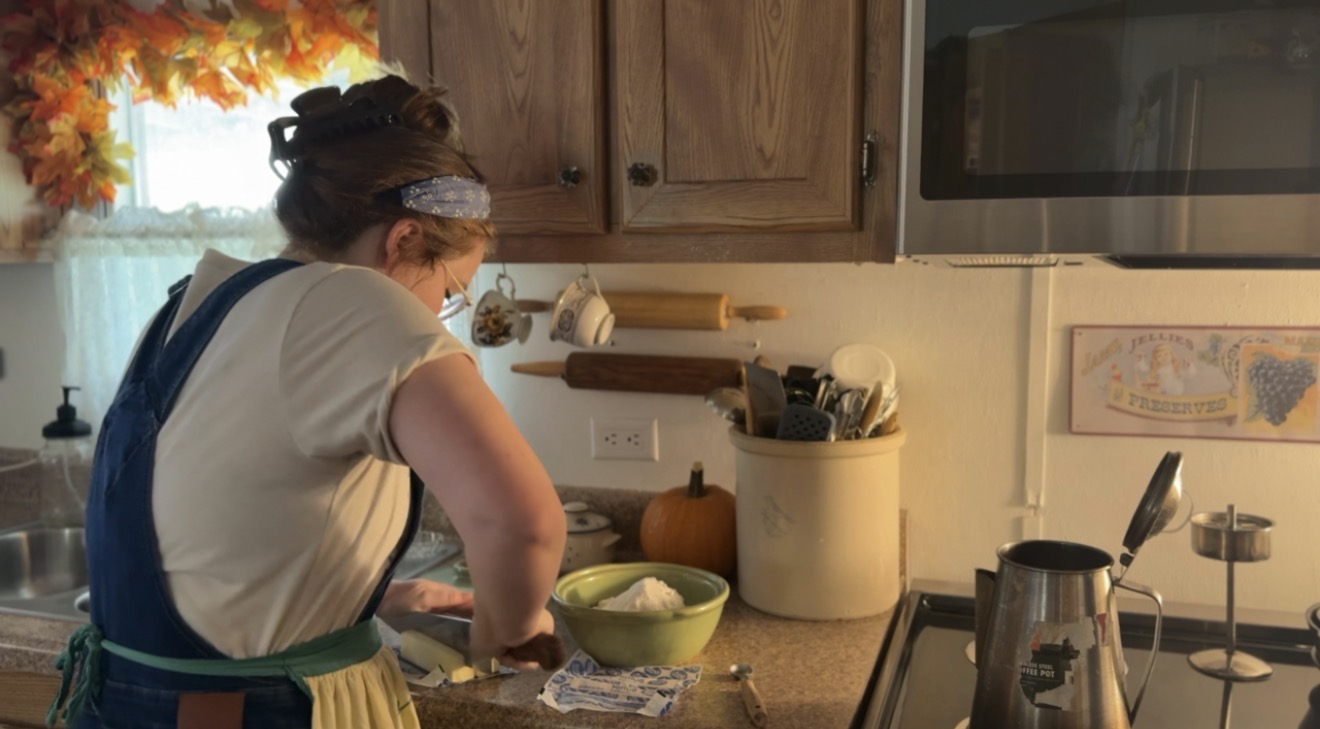
To the flour mixture, add in cubed butter. I like to chop each stick in half lengthwise so you have four long quarters per stick. Then I chop down the sticks in tablespoons widths (8 per stick) to cube it. Add the butter and coat in the dry ingredients.
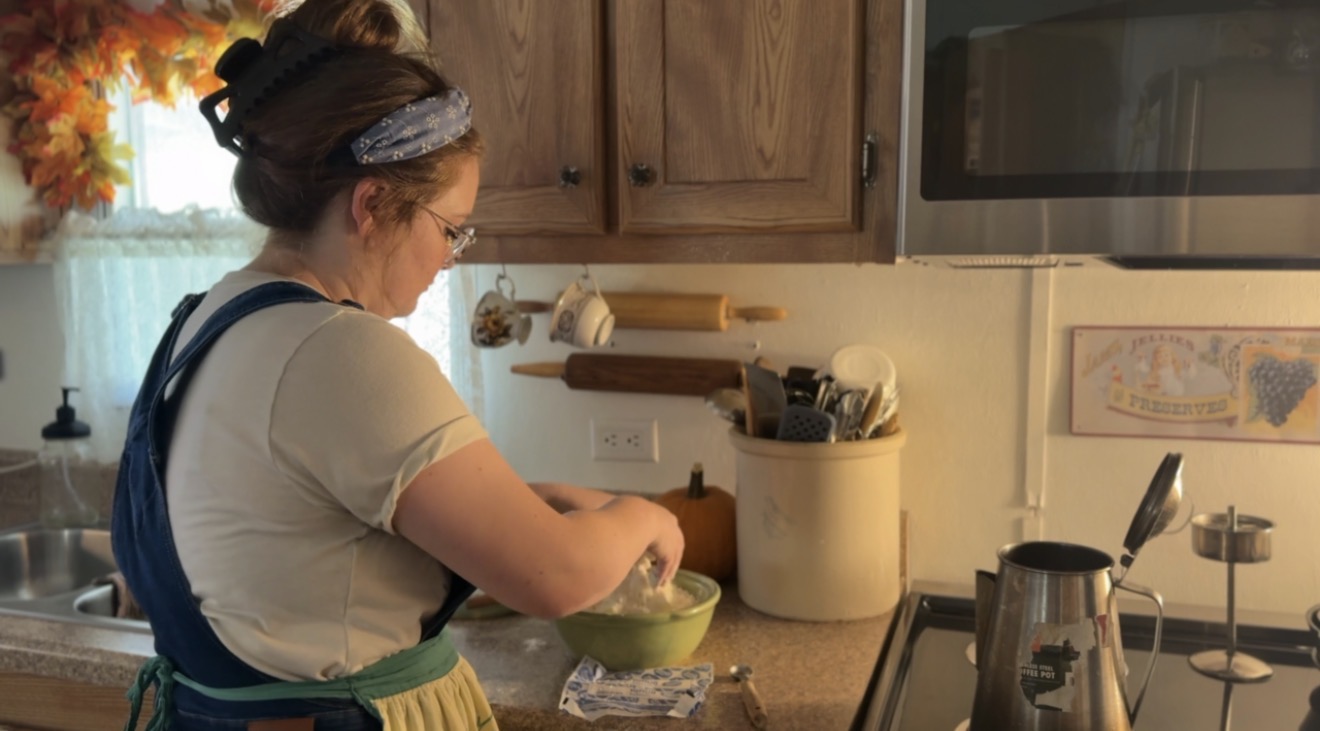
My biggest tip to get the flakiest pie crust and one that can also be used sooner is to leave the chunks large. You don’t want to cut these into the flour to be the size of small peas like many other recipes say. You want to flatten each cube into more of a small sheet of butter and evenly mix those into the flour, that is all. The larger the chunks, the larger the air pockets will be in your baked crust, which means it will be a very flaky crust.
Add Vinegar and Water
I add a tablespoon of white vinegar to my pie crust to help keep the dough tender and keep the gluten strands from developing. I’ll explain a little more about why I use it below, but for now, just add it along with enough ice water to bring the dough together. You don’t want it to constantly fall apart and crack (use more water) but a wet, sticky dough (use less water) is not good either. This is about 1/2 cup or 8 tablespoons of ice water.
Chill (Two Ways)
Rolling it cold
Shape dough into a thick disc, wrap dough in plastic wrap or store in a container if not using right away. This dough is best chilled, however, I have had great results using it right away with no chill time. The minimal working of the dough with warm hands helps the butter to stay cold so it does just fine. However, I will add that with large butter chunks, this dough can have a tendency to stick to your work surface. A cold dough helps this or more flour on the table. This dough can also be kept in the fridge for 3-5 days or in the freezer for several months! That is a perfect enough reason to make a bunch up of homemade pie dough and be ready at a moments notice to whip up a treat with a perfect pie crust.
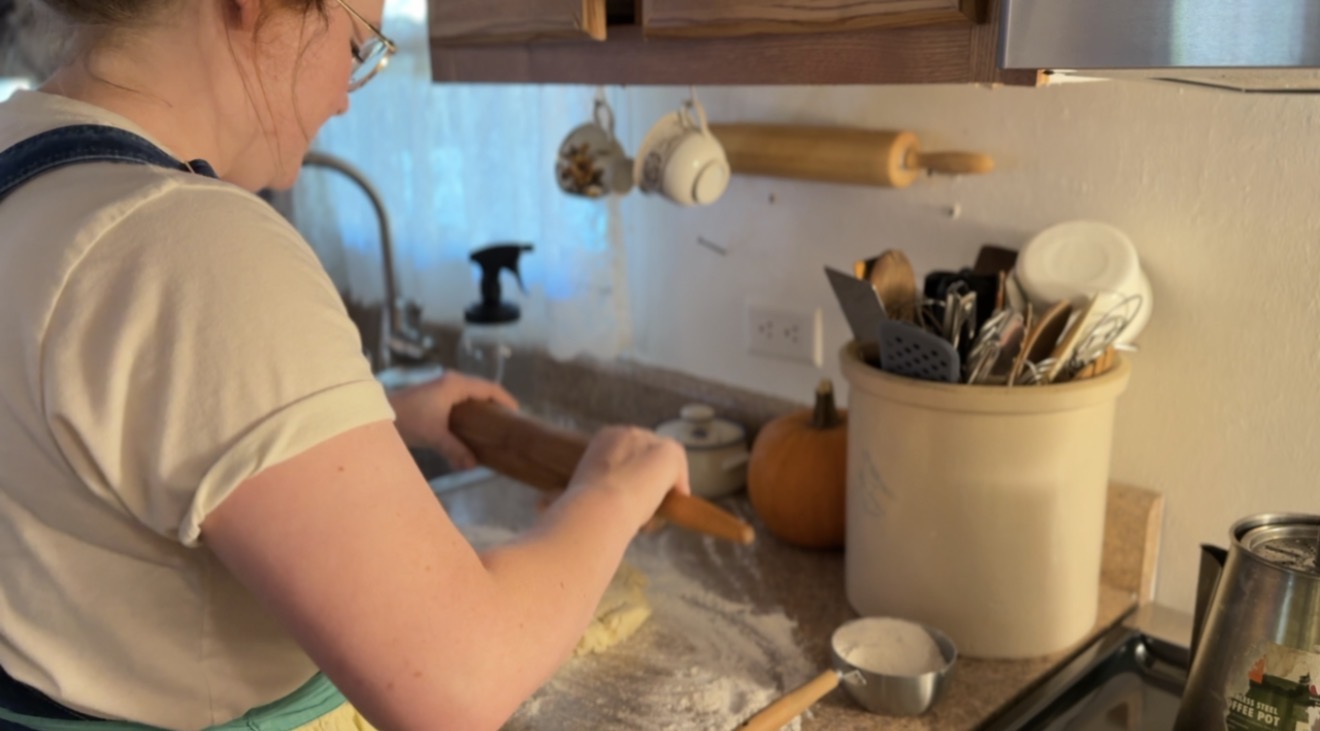
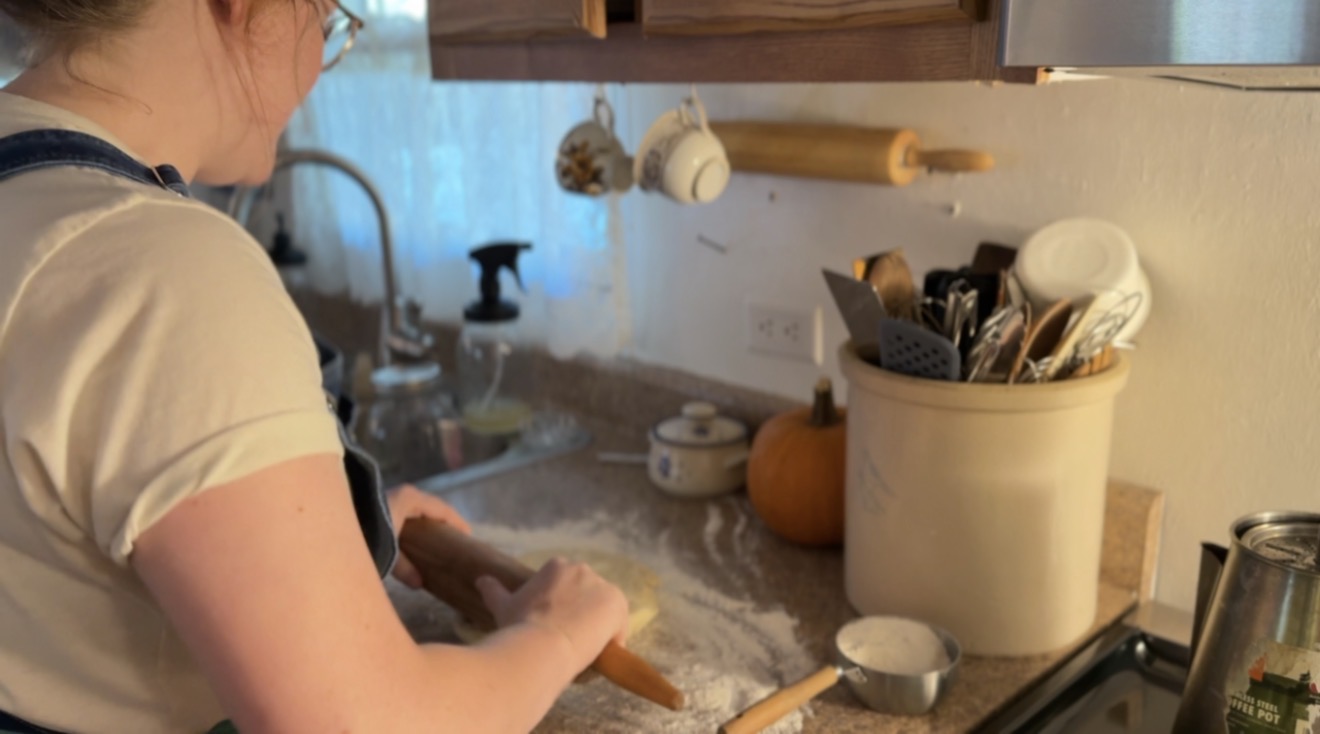
If using right away, this doesn’t really apply because it will be just as cold as it is after mixing. But if you are removing it from the fridge, work it immediately by beating it out some with your rolling pin until it can be rolled. This sounds funny but it makes the dough workable sooner without it getting to room temperature first. If from the freezer, let it sit for a few minutes to not be solid but then roll the same way, beating it out some until workable with your rolling pin, then rolling when able.
Roll it out according to your pie or dessert recipe.
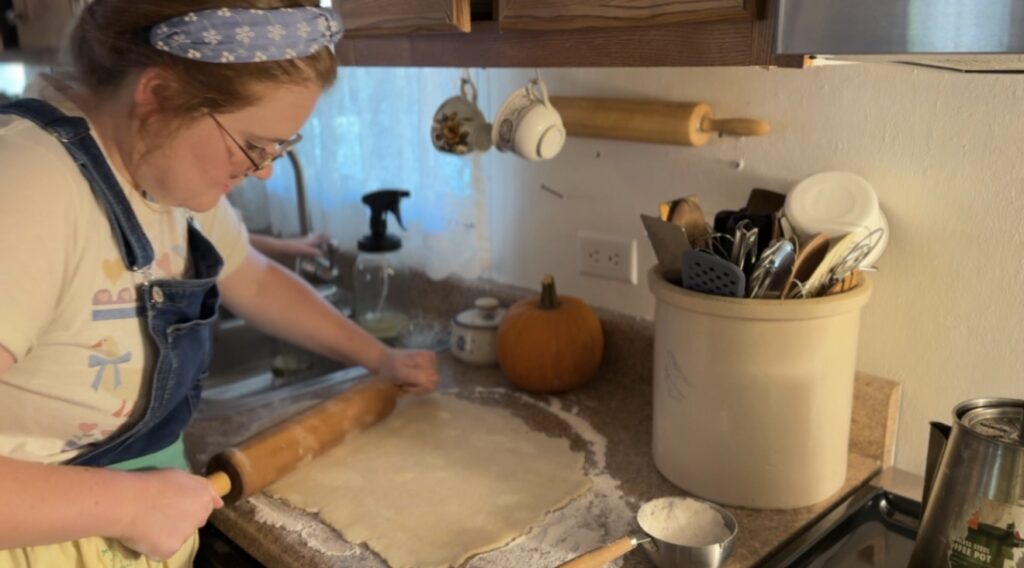
Look at the large butter layers in the dough, this will make flakey crust.
Look at the large butter layers in the dough of this unbaked pie crust, this will make flakey crust!
Or Refrigerate Assembled Dish
Another option for a great pie is to chill the entire pie or dessert after assembling. This is my favorite way to prepare a pie or other dessert. If I need just the crusts ahead of time, freezing or keeping in the fridge is fine but it’s going to warm up after some so putting the whole pie back in the fridge for a bit really makes for a great crust. Fridge to oven. This also means I can make a pie in advance and just bake it when I’m ready. To do this, I make the pie shell in the pie dish, assemble the pie, cover it and put it in the fridge. When I’m ready to bake, I pull the whole pie out and sit it on top of the oven while it preheats. I add my egg wash or cream and top with sprinkled sugar. This warms the pan from the bottom to prevent shock from a cold pant into a hot oven, but doesn’t heat the whole pie, keeping the butter nice and cold. This works the same for any treats made with pie crust like fried pies, dumplings or homemade poptarts!
Now this is probably my favorite way to prepare a pie, especially when I’m making one ahead of time.
Rather than chilling just the dough, I like to assemble the entire pie and then put it in the refrigerator until I’m ready to bake. I make the pie shell in the dish, add the filling, finish the top if it needs one, and cover the whole thing before putting it in the fridge. This works for any recipe, like apple dumplins or hand pies. This gives the butter a chance to firm up again after all that rolling and handling. It also means I can get the pie made ahead of time and have one less thing to worry about when it’s time to bake! When I’m ready, I finish it with an egg wash or a little cream and a sprinkling of sugar, if the recipe calls for it, and bake according to the directions for that particular pie.
Just be mindful of your pie dish. Glass and ceramic dishes can be sensitive to sudden temperature changes, so always follow the manufacturer’s instructions. A metal pie pan is a handy option when you want to move a chilled pie straight into a hot oven.
What Does Adding Vinegar To Pie Crust Do?
Vinegar is a handy little trick I use here a lot for any baking, especially anything with whole grain or a gluten free flour. It also works especially well for recipes where you do not want a lot of gluten development. Gluten development makes a dough stronger (like you want for bread) but it can also make the dough tougher. We want pie crust to be light and airy, not dense and heavy. Vinegar helps to keep the grains soft. It also helps to keep the pie crust from shrinking, which can also be caused by overworking the dough by pulling and tugging on it in the pan. It helps to keep it from snapping back to it’s original size.
And That’s Really All There Is To It!
A good homemade pie crust doesn’t have to be complicated. Keep that butter cold, leave those lovely big pieces throughout the dough, and don’t work it any more than you have to. Before long, you’ll have your own favorite little tricks, too. And hopefully a freezer with a little extra pie dough tucked away for the next time you feel like baking something sweet!
If you’d like to see any of these steps in action, I’ve included my pie crust videos above. Sometimes it’s just easier to see how the dough should look than to read about it!
Deep Dish Pie Crust
Ingredients
- 2 1/2 cups flour
- 1/2 teaspoon salt
- 1 tablespoon sugar
- 1 cup cold butter
- 1 tablespoon white vinegar
- 1/4-1/2 cups ice water
Instructions
- Combine flour, salt, and sugar in a bowl or food processor.
- Chop butter (or fat of choice) into large chunks. I like to cut each stick in half lengthwise, then flip those over and do it again, basically cutting it in 4 long quarters. Then chop in tablespoon width chunks.
- Add butter chunks and coat in flour. Lightly cut the butter into the flour. But do not create pea sized chunks. What makes a flaky crust is air pockets where the butter has melted so for this, you only want to evenly distribute the butter and flatten it into little sheets, not break it up into smaller chunks.
- Add vinegar then water just until the dough sticks together. Use according to pie or dessert recipe instructions.
Notes
This pie crust does well immediately, or if stored in the fridge or freezer until ready to use. The colder the butter, the better. There are two ways to do this, chill and then roll or roll and chill the assembled pie or dish.